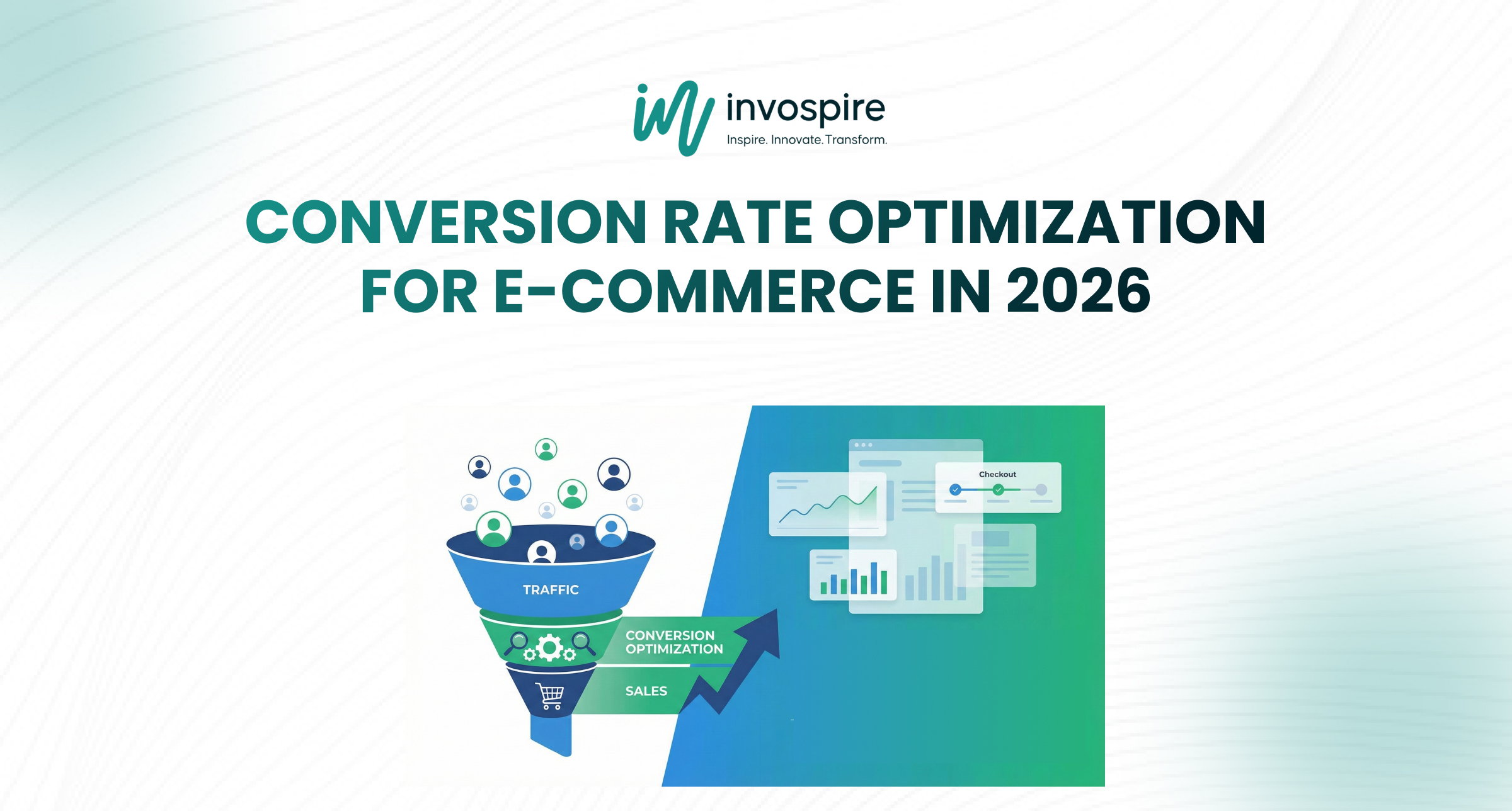
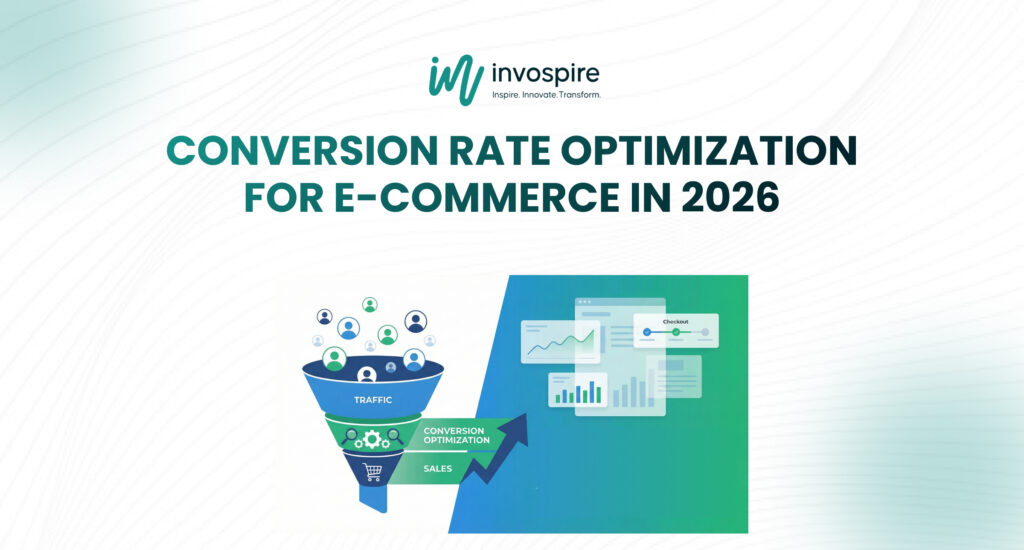
In today’s e-commerce world, traffic is no longer the problem. Most online stores can buy visitors from Google, Facebook, TikTok, or influencers. But the real challenge is turning those visitors into paying customers. You can drive 10,000 visitors a day but if only 1% buy, you’re leaving enormous revenue on the table. It’s like pouring water into a leaky bucket.
This is where Conversion Rate Optimization (CRO) becomes your most powerful growth lever. CRO is not about changing button colors or copying competitors. It is a data-driven system that combines psychology, UX design, analytics, and testing to increase how many visitors actually convert.
In this guide, you’ll learn:
What CRO really means in modern e-commerce
Why most optimization efforts fail
High-impact CRO strategies for 2026
The metrics that truly matter
Tools and frameworks professionals use
A full CRO checklist
Answers to the most common CRO questions
Let’s build a profit-driven e-commerce store, not just a visually appealing one.
What Is Conversion Rate Optimization (CRO)?
Conversion Rate Optimization (CRO) is the process of increasing the percentage of visitors who take a meaningful action on your website. For e-commerce, this usually means:
Purchasing a product
Adding to cart
Starting checkout
Completing checkout
Signing up for email or SMS
CRO focuses on removing friction, reducing confusion, and increasing trust so that more visitors feel confident enough to buy. The power of CRO is simple: More conversions from the same traffic = more revenue without more ad spend. Instead of spending another $10,000 on ads, you can often double your revenue just by improving how your existing traffic behaves.
Why Most E-Commerce CRO Fails
Most stores try CRO but very few do it correctly. Here’s why.
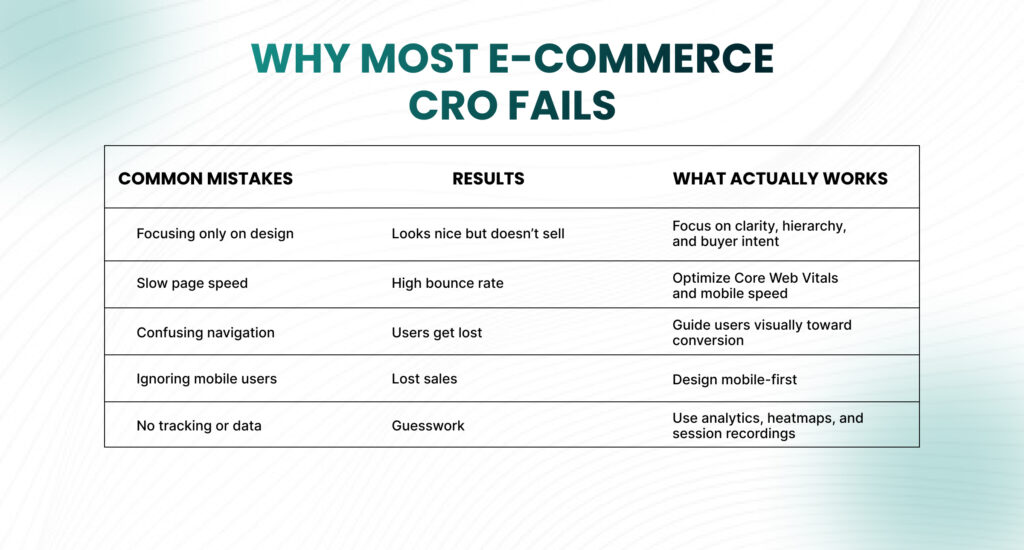
Most brands treat CRO like decoration instead of behavior engineering. The winning stores treat CRO as a system of continuous learning and testing.
The Psychology Behind High Converting Stores
Every buyer asks three silent questions before clicking Buy Now:
1) Can I trust this store? Trust is built through:
Reviews and ratings
Secure checkout badges
Transparent policies
Professional design
Clear contact information
2) Does this product solve my problem? Your copy should focus on:
Benefits, not just features
Real use cases
Outcomes and results
3) Why should I buy right now? Urgency, scarcity, and clarity drive action:
Limited stock
Time-sensitive offers
Clear value comparison
When these three questions are answered clearly, conversion rates increase naturally.
7 Must Do CRO Strategies for 2026
1) Speed Optimization More than half of users leave if a page takes longer than 3 seconds to load. Focus on:
Image compression
Script optimization
CDN usage
Lazy loading
Core Web Vitals
Fast stores convert better. Always.
2) Trust & Social Proof Trust is the biggest conversion driver. Add:
Real customer reviews
Star ratings
Before-after images
User-generated content
Security and payment badges
People buy what others already trust.
3) Simplified Navigation Your site should behave like a guided sales funnel. Visitors should always know:
What to do next
Where to click
How to complete their purchase
Fewer choices = higher conversions.
4) High-Impact Product Pages Your product page is your salesperson. It must include:
Clear product benefits
Transparent pricing
Strong images and videos
FAQs and objections handled
Delivery and return information
Every unanswered question kills conversions.
5) Optimized Checkout Flow Most sales are lost at checkout. Reduce friction with:
Guest checkout
Fewer form fields
Auto-fill
Multiple payment options
Progress indicators
A smooth checkout can increase revenue by 30–60%.
6) Heatmaps & User Behavior Tracking Tools like Hotjar and Crazy Egg show:
Where users click
Where they stop scrolling
Where they get confused
This reveals exactly where your funnel is leaking money.
7) Segmented Offers Not all users behave the same. Use:
Cart abandonment offers
First-time visitor discounts
Loyalty rewards
Returning customer upsells
Personalization increases conversion rates dramatically.
CRO Metrics You Must Track
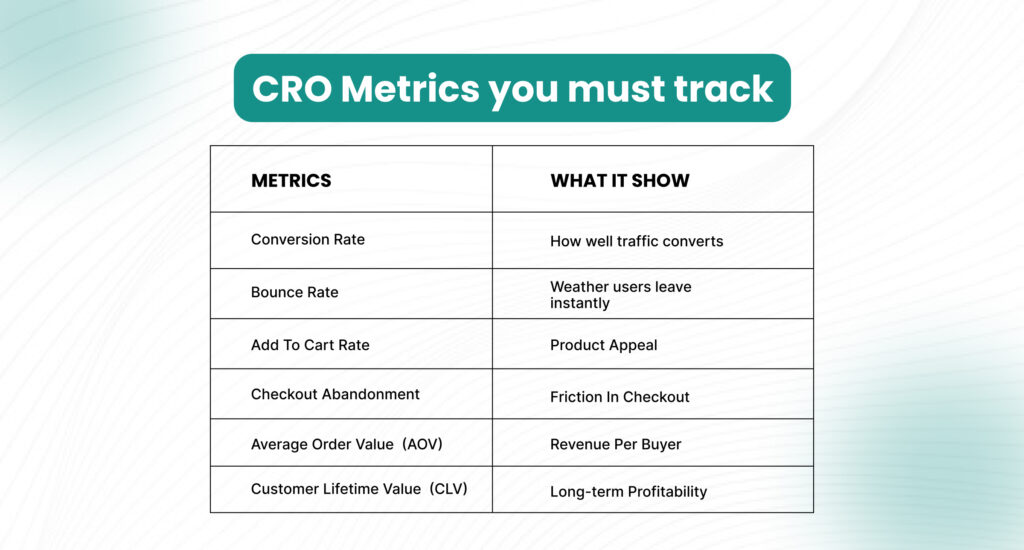
These metrics tell you where to optimize, not just how much traffic you have.
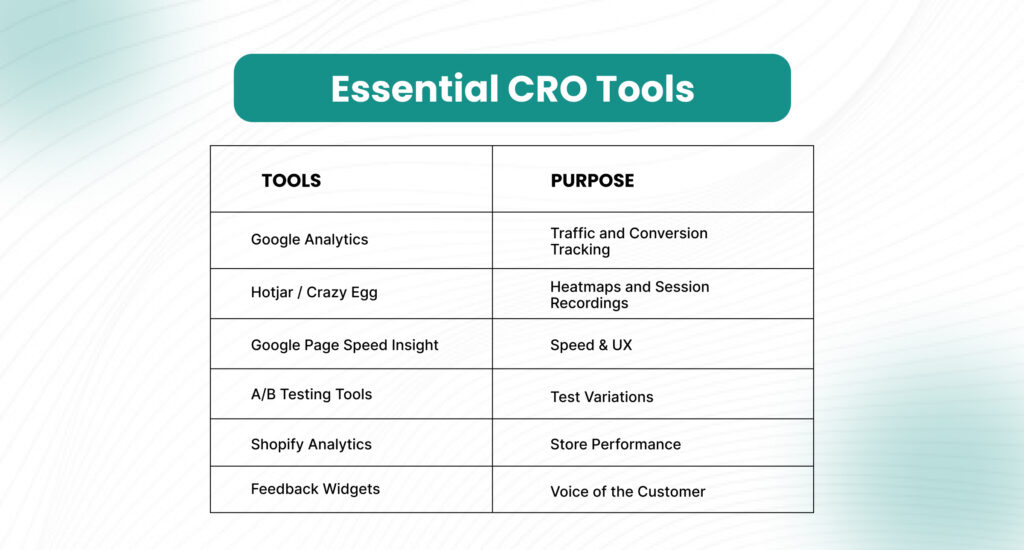
Conversion Rate Optimization for E-Commerce 2026 Pre-Launch Checklist
Before launching any page, ask:
Is the main offer clear within 3 seconds?
Is the call-to-action obvious?
Does the page load fast on mobile?
Are trust signals visible?
Are conversions being tracked?
If any answer is “no”, you are losing money.
Frequently Asked Questions (FAQs)
What is a good conversion rate for e-commerce?
Most stores convert between 1–3%. Optimized stores can reach 5–10%.
How fast can CRO improve sales?
Small gains can appear in a few weeks, but meaningful results usually take 2–3 months.
Does CRO improve SEO?
Yes. Better engagement, faster loading and lower bounce rates from CRO can help your search rankings.
Do I need a CRO expert?
You can start CRO on your own, but a specialist can accelerate results and implement advanced testing frameworks.
Final Thoughts on Conversion Rate Optimization for E-Commerce 2026
Conversion rate optimization for e-commerce 2026 is about more than testing button colours; it combines data quality, artificial intelligence and human-centred design. Invest in robust analytics and first-party data, then let AI personalize experiences based on real customer behaviour. Modern CRO also respects micro-moments – optimizing every small interaction from search to checkout, whether visitors are on mobile, desktop or using voice assistants.
Trust and transparency remain essential: implement zero-party data strategies and visible security badges to earn loyalty. Beyond quick wins, focus on unified marketing and sales efforts, intuitive design, fast page speeds, and rich media like video. For further reading, see this guide to e-commerce CRO trends and our own article on creating user personas to inform your tests. By staying data-driven and user-centred, your conversion rate optimization efforts will transform traffic into loyal customers.